How to make paneer
July 13th, 2016 at 9:36 pm (Food)
I recently attended an Indian cooking class with a friend, and a couple of weeks later, we decided to put our new skills to the test. One of the things we needed was paneer. Paneer is that awesome cheese that comes embedded in saag paneer and other tasty Indian dishes. Instead of buying it, I decided to find out how to make my own. Turns out that it’s quite easy!
I used this paneer recipe. Believe it or not, paneer is just curdled milk! All you do is heat up whole milk, add an acid (I used lemon juice), and then once the milk curdles, you pour it through cheesecloth to strain out the whey and retain the curds. Here’s what it looks like:
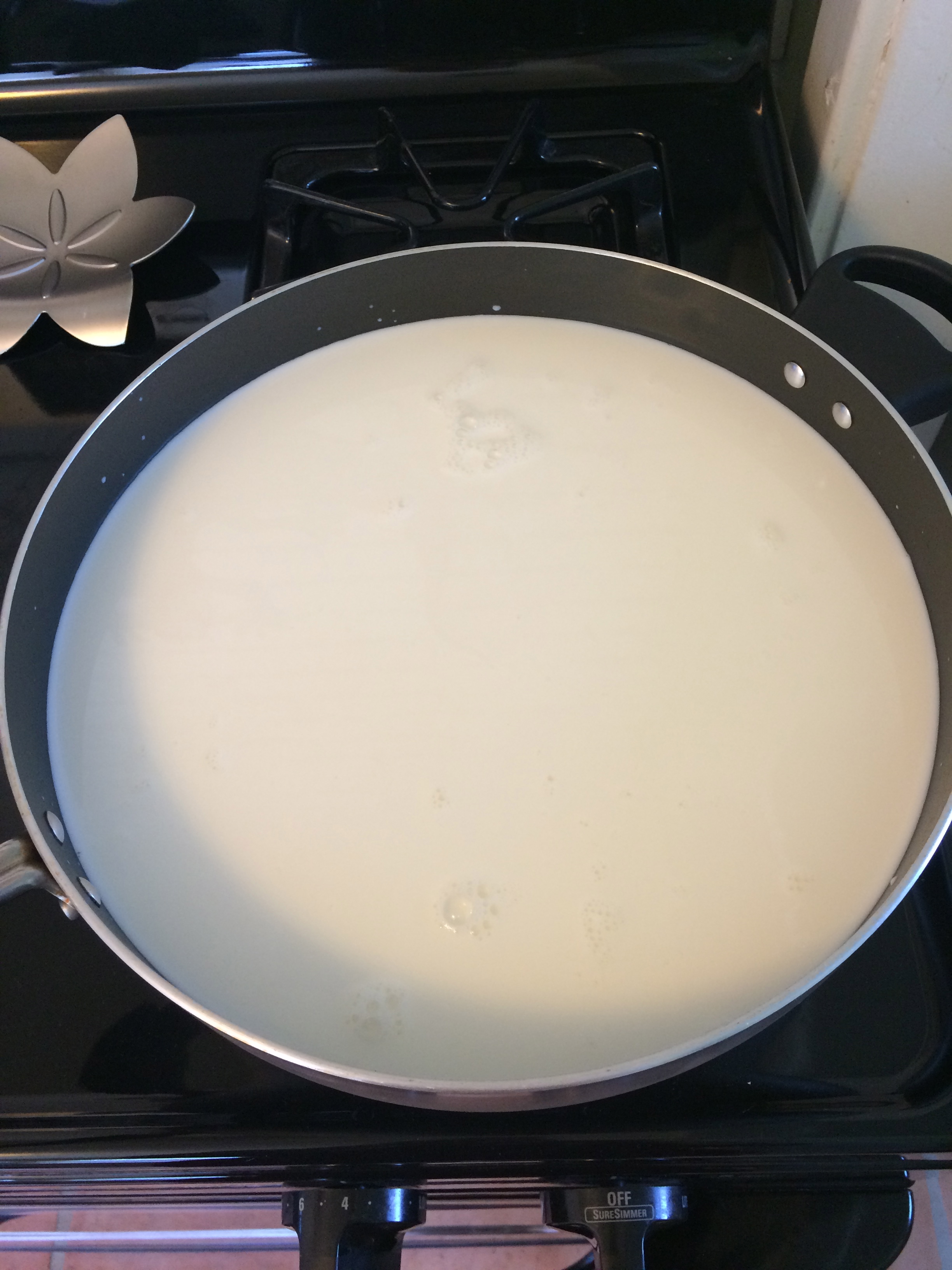 Heat up half a gallon (8 cups) of milk. This will yield about 1 cup of paneer.
 Milk curdles!
The little brown bits are from the milk cooking on the bottom of the pan. The recipe says “stirring frequently” but really they mean “stirring constantly” to avoid this. I ended up fishing out as many little brown bits as possible, but it’s probably fine to leave them in (just visually a bit strange). Another method I later heard was to not stir at all and let the brown skin form at the bottom, then just leave it behind when you pour the mixture out.
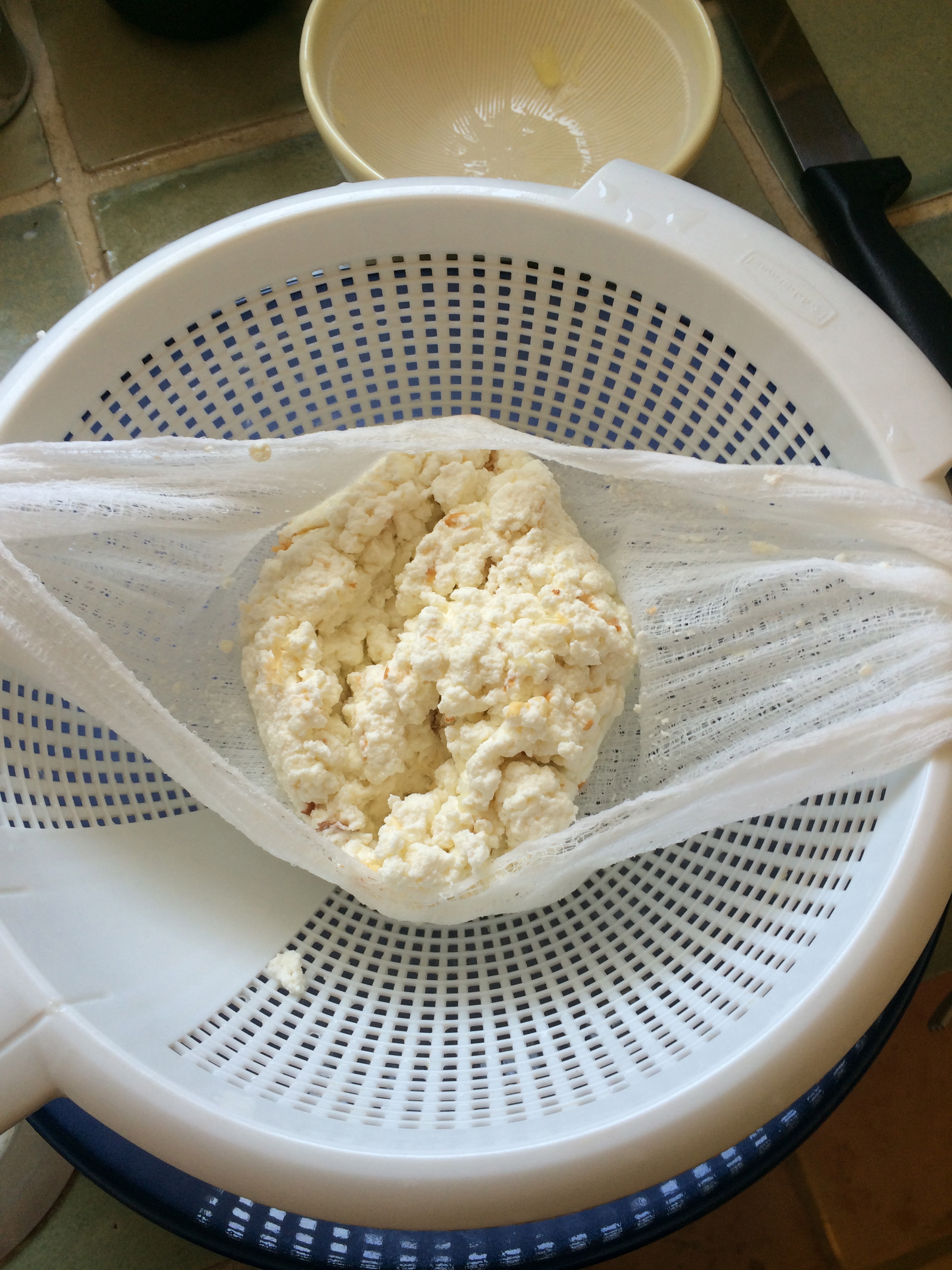 I didn’t actually pour the mixture out because the cheesecloth didn’t really cover my whole colander. Instead I skimmed the curds out and plopped them onto the cheesecloth, which worked just as well. I poured the remaining whey down the drain. Later I learned that you can save the whey to use when making bread for a little extra flavor.
 I twisted the cheesecloth around the curds and squeezed moisture out, then let it drip for a while, then put it on a plate, in the fridge, weighed down by other objects, to squeeze out more liquid. It worked famously!
I unwrapped the paneer and sliced it into cubes for the saag paneer.
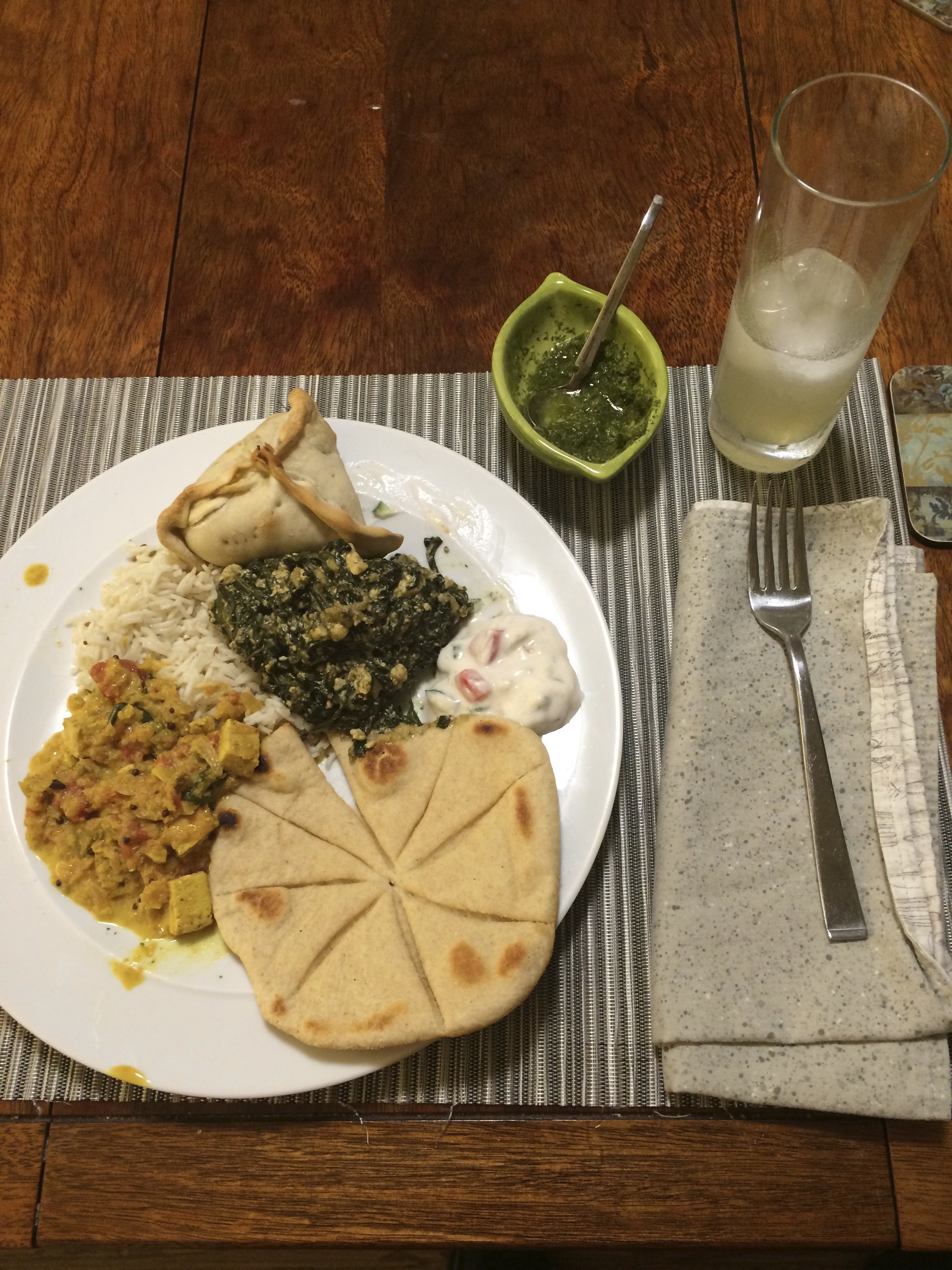 Here is the final meal: tofu curry, basmati rice, samosa, saag paneer, raita, and homemade naan, plus cilantro monster sauce and mint “cocktail” (non-alcoholic) – the mango lassi came later. Phenomenal!
 It turns out that “breakfast tea” and “afternoon tea” have no particular standard definitions, but there are conventions. In general, a breakfast tea has a higher caffeine content, while an afternoon tea is meant to create
 The phrasing might make one think that peanuts are also low in saturated fat. But according to my jar, 1.5 ounces of them provides 3 grams of saturated fat, or 15% of your US RDA. So as long as that handful of peanuts is only 1/6 of your daily fat consumption, does that count as “low”? Notice you are also not permitted any increase in calories consumed, so if you add the peanuts, you have to take away 260 calories of something else. Or maybe not.