Kiri L. Wagstaff
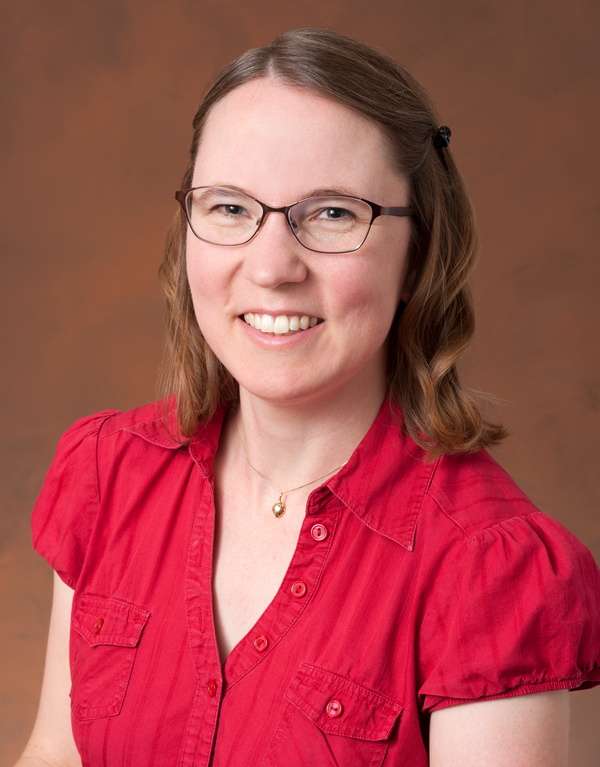
I am an avid learner, researcher, and educator. I spent 19 years at the Jet Propulsion Laboratory in Pasadena, CA, as a Principal Researcher in the Machine Learning and Instrument Autonomy Group (2003 to 2022). At JPL, I focused on investigating ways that machine learning can be used to enable scientific discoveries and increase the autonomy of space missions. It has been a richly rewarding, exciting position working with stellar colleagues from planetary science, radio astronomy, cosmology, agriculture, library science, and other fields. In addition, I had the unusual chance to serve as a tactical planner and uplink lead for the Opportunity Mars Exploration Rover (2013 to 2017) and as the PDS Imaging Node Technologist (2018 to 2022).
In 2022 I made the decision to retire from JPL and identify additional areas in which I could have impact. From 2019 to 2023 I taught courses at Oregon State University. I am now serving as a AAAS Congressional Fellow in Artificial Intelligence for Senator Mark Kelly in Washington D.C. I am passionate about keeping machine learning efforts relevant to our society's needs.
My research projects have included:
- Onboard science for Europa Clipper: Developing and testing methods to quickly analyze data as it is collected during a flyby of Europa to assign high downlink priorities to the most scientifically valuable observations and to enable cross-instrument collaboration
- Mars Target Encyclopedia: Information extracted from scientific publications for planetary science (MTE GitHub)
- V-FASTR: Efficient machine learning to detect transient radio phenomena (e.g., pulsars and Fast Radio Bursts) in real time
- Collaborative machine learning for volcano sensor networks
- Automatic landmark identification and change detection in Mars orbital images (dark slope streaks, dust devil tracks, etc.)
- Analyzing the sensitivity of machine learning algorithms to high-radiation environments
- Predicting county-level crop yield from Earth orbital images
- Modeling user preferences for sets, rather than individual items (like music playlists or rover image downlink sets)
- Modeling flight software with state charts and using automatic code generation to convert them into C/C++ (for implementation) or Promela (for model checking)
- Tracking the north polar ice caps (water and CO2) on Mars
News and upcoming events:
- I was interviewed by Nature in May 2024 about my work in Congress as a AAAS Fellow.
- I am serving as Chair of the new ICML Position Paper track. Stay tuned and join us at the conference in July for thought-provoking, lively debates!
- I gave a 10-minute presentation on AI questions before the U.S. Congress at AAAI in February 2024 (my part starts at 27:50).
- I was chosen as a member of the AAAS Science and Technology Policy Fellowship Rapid Response AI Cohort (2023-2024).
- I was elected a Fellow of the Association for the Advancement of Artificial Intelligence (AAAI) in 2023 for "significant contributions to deployed AI systems in NASA ground and spacecraft operations, AI education, and clustering algorithms."
- Andy Okamoto is this year's recipient of the Kiri L. Wagstaff AI/ML scholarship at the University of Utah. Congratulations!
- Recommended: Machine Learning that Matters (pdf, 6 pages, 234K) and the slides from a subsequent invited AAAI talk: Challenges for Machine Learning Impact on the Real World (1.6M).
- Interview with the How to Do Grad School podcast: Why We Learn, How to Write, & Fostering Collaboration (August 2021)
- Recently published or posted:
-
Hidden Heterogeneity: When to Choose Similarity-Based Calibration.
Kiri L. Wagstaff and Thomas G. Dietterich.
Transactions on Machine Learning Research, 2023.- We developed a method to calibrate classification predictions by leveraging similarity in feature space. This approach can particularly benefit subpopulations within the data set.
-
Hidden Heterogeneity: When to Choose Similarity-Based Calibration.
- All publications
- Automated Classification to Improve the Efficiency of Weeding Library Collections.
Kiri L. Wagstaff and Geoffrey Z. Liu.
Journal of Academic Librarianship, 44(2), p. 238-247, 2018.- We evaluated several machine learning classifiers in terms of their ability to predict which books are most likely to be weeded from a collection. We applied this method to a collection of more than 80,000 items from an academic library and found statistically significant agreement (p = 0.001) between classifier and librarian decisions.
-
Marginalia in the digital age: Are digital reading devices meeting the needs of today's readers?
Melanie Ramdarshan Bold and Kiri L. Wagstaff.
Library & Information Science Research, 39(1), 16-22, 2017.- We surveyed readers to find out about their attitudes toward marginalia, and whether and how often they indulged in it themselves. We also investigated whether marginalia translates into electronic books and which features are most desired by users of e-readers.
- The Early History of the Monrovia Library, my term paper for LIBR 280 (pdf, 16 pages, 1.0M)
- The Evolution of Marginalia, my term paper for LIBR 200 (pdf, 14 pages, 1.1M)
- 2023 Fellow of the Association for the Advancement of Artificial Intelligence (AAAI)
- 2020 NASA Exceptional Technology Achievement Medal for "inventing dynamic landmarking [to detect surface features from orbital images] leading to novel onboard mission capabilities and infusion into the Planetary Data System"
- 2019 Senior Member of AAAI
- 2017 Calvert N. Ellis Memorial Lectureship from Juniata College in Huntingdon, PA
- I won the 2017 National Adult Spelling Bee!
- I was elected to the AAAI Executive Council for 2015-2018.
- I was promoted to Principal at JPL in January 2015.
- 2014 NASA Group Achievement Award (Mars Exploration Rover Science and Operations Team)
- 2014 NASA Group Achievement Award (IPEX/CP-8 CubeSat Flight Team)
- 2012 NASA Exceptional Technology Achievement Medal for "the development of adaptive data processing techniques for identification of time-varying sources with next-generation radio arrays"
- 2012 AAAI Outstanding Program Committee Member Award (one of four people chosen)
- 2012 Young Alumni Par Excellence Award from the University of Utah
- 2008 Lew Allen Award for Excellence in Research for "advancing the performance and application of machine learning methods to onboard Earth science missions and spacecraft engineering."
- I served as the Director of Flight Operations for the Oregon State Flying Club from 2021-2023.
- I volunteered in support of the Monrovia Public Library and Kids Building Things for several years and at the Corvallis-Benton County Public Library in 2023.
- I completed the Benton County Sheriff's Office Citizens' Academy in 2022.
- I traveled to Guatemala to volunteer with Librarians Without Borders in April 2018.
- I served as Editor in Chief of AI Matters, the SIGAI Newsletter, from April 2014 to June 2015.
- I taught Space Camp to middle school students in South Korea in the summer of 2014.
- I served as part of Crew 89 at the
Mars Desert Research Station, from January 22 to February 7, 2010.
You can read our blog to find out what we did, see pictures, and watch videos!